
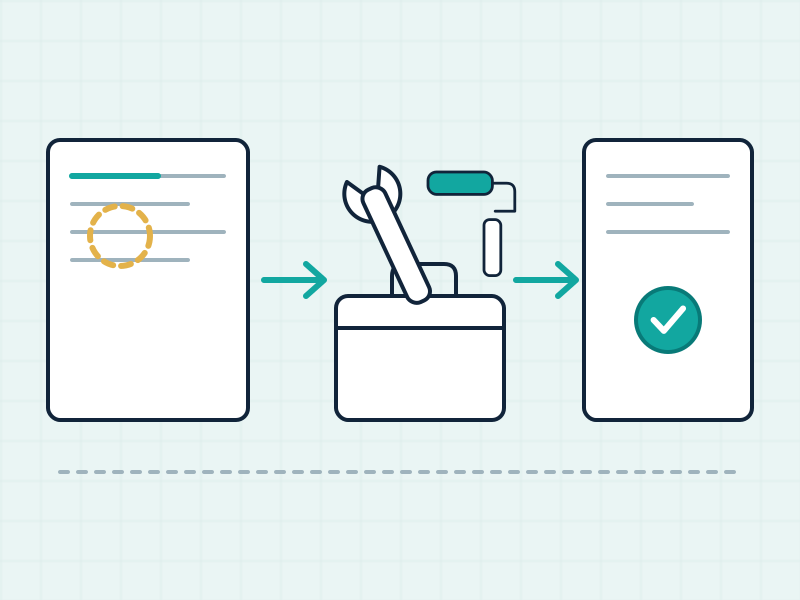
What counts as a renovation defect?
A renovation defect is work that was done but is not right, measured against what you agreed. That is different from outstanding work, which has not been done at all, and from a change of mind, which is a new request. Keeping these three apart makes every later conversation easier.
Typical renovation defects include tile lippage after re-tiling, gaps in sealant around new sanitaryware, cabinet doors out of alignment, paint overspray on fittings, cracks around new ceiling access panels, loose faceplates and debris left in air-conditioning grilles. The Defect Library illustrates many of them.
How should you document defects?
Good documentation is specific, visual and dated. For each item, record:
- a reference, such as "BATH-04", used in every later message;
- the location: room, wall or fitting, described so a stranger could find it;
- a short description of what is wrong, without opinion or blame;
- two photographs: a close-up and a wider shot showing where it is;
- the date you observed it.
Where the issue is functional, note how you tested it: "drawer does not close fully when pushed", "water stands near the shower drain after use". If an independent post-renovation inspection has been carried out, its reference numbers can serve as your references.
How do you report defects to the contractor?
Report once, completely and in writing.
- Combine everything into one list or report, rather than a stream of messages.
- Separate outstanding works from defects, so each is handled correctly.
- Use the channel your contract names, or the one the contractor has used for formal correspondence.
- Write a short covering note asking for a response for each item.
- Keep a dated copy of what you sent and any acknowledgement.
What should you ask the contractor for?
A useful response, for each item, says:
- whether it is accepted for action, queried or disputed, with reasons;
- what will be done, such as adjustment, repair or replacement;
- when, and what access is needed.
Ask also how materials will be matched, for example replacement tiles from the same batch or paint from the same mix. Mismatched repairs are a common source of a second round of items.
How long is the rectification period?
Look first at your contract. It may set a defects period, a rectification timeframe or retention terms that apply after completion. Note any dates in your log.
If the contract is silent, agree a reasonable, written timeframe with the contractor. Grouping items helps: quick adjustments in one visit, replacement items once materials arrive, and anything needing investigation on its own timetable.
How do you keep track?
Keep one log, updated every time something happens.
| Reference | Location | Reported | Contractor response | Planned action and date | Reported fixed | Your check | Status |
|---|---|---|---|---|---|---|---|
| BATH-04 | Main bathroom, basin | — | — | — | — | — | Open |
Rules that keep the log useful:
- never overwrite earlier entries; add new ones;
- record every contact: date, channel, who and what was said;
- keep before and after photographs from similar positions.
How do you check the repairs?
When items are reported fixed, check each one against its reference before you close it.
- Simple items you can check yourself: a drawer that now closes, a refitted faceplate, renewed sealant.
- Many items, or you are abroad: a Reinspection (sometimes called de-snagging) records each earlier finding as appearing resolved, remaining open or not checked.
Reinspection terms
Terms are confirmed in writing in your quote.
Watch for repair-induced damage, such as a scuffed wall beside a replaced cabinet, and log it against the same reference.
What if you and the contractor disagree?
Stay specific and stay in writing.
- Ask for reasons for any item that is declined.
- Compare with the documents: scope, drawings, samples and any variations.
- Consider a further technical opinion where cause or extent is unclear.
- Take legal advice for legal questions, including withholding payment or bringing in another contractor. An inspection report is evidence; it is not a legal opinion.
- Keep it calm. A clear, factual record is more persuasive than strong words.
How do you decide what to chase first?
When items move slowly, prioritise:
- safety: loose fittings, damaged faceplates, anything that could cause injury;
- water: leaks, sealant gaps and drainage, which can cause further damage;
- function: doors, drawers, cooling and fittings that affect daily use;
- appearance: paint, grout and minor marks.
Bring forward anything linked to a contractual date, such as the end of a defects period or a retention release.
What if a defect appears after sign-off?
Some items only appear with use: staining near a shower after a few weeks, a joint that opens as the building settles into a new season, a door that starts to bind. If something appears after you have signed off:
- photograph it straight away, with the date and location;
- check whether your contract or any product warranty covers the period you are in;
- report it to the contractor in writing, referring to your original list if the item is related;
- add it to your log as a new entry rather than reopening an old one without explanation.
Keep the scope, the completion list, the contractor's responses and the warranties together, so the history is easy to follow if a question comes up months later.
What about building and community rules?
Some buildings and communities set rules for renovation works and their completion. Check with your building management or community about anything required at the end of works. That is separate from defects between you and your contractor, and an inspection report does not confirm compliance with those rules.
For defects in a new home reported to a developer rather than a contractor, see following up with the developer. To prepare your own list first, use the post-renovation inspection checklist.
Common questions
How long should a contractor take to fix renovation defects?
There is no single answer. Check your contract for any defects or rectification period. If it is silent, agree a reasonable, written timeframe with the contractor for each group of items.
Can I hold back payment until defects are fixed?
That depends on your contract, including any retention or payment terms. Check your contract, and take independent legal advice before withholding any payment.
The contractor says an item is not a defect. What should I do?
Ask for the reason in writing, and compare it with the scope, drawings and samples. If you still disagree, consider a further technical opinion and, for contractual questions, independent legal advice.
Should I use a different contractor to fix the items?
Check your contract first. Bringing in another contractor before the original one has had a chance to respond may affect your position and any warranties. Take advice if you are considering it.
Does SnagRight contact the contractor for me?
No. SnagRight coordinates the inspection and the report. You, or someone you authorise, send it to the contractor. Any further support is described in your agreement.
Request an Inspection Quote
Tell us about the property. We confirm the scope, its limitations and a quote in writing before you commit. Sending an enquiry takes no payment.