Finishes

Surfaces you can see and touch.
- Paint, plaster and tile finish
- Grout and sealant lines
- Flooring joints and visible damage
Limitation. Finishes behind furniture, fixed units or surfaces that cannot be accessed are not assessed.
Property Snagging & Inspections in Dubai

The flagship guide for new-home buyers
You chose the location, the layout and the price with care. Handover is the moment to check that what you receive matches what you paid for, and to put anything that does not on record.

General information. Quote first: a written scope and its limitations before you commit.
A new home is the end of a long process: research, reservation, payments, construction updates and, finally, a handover notice. By the time the keys are offered, most buyers are ready to move on. Yet handover is one of the few points where you, the developer and the property are all in the same place, with the property empty and the process still open.
A finished interior can look excellent and still contain items that need attention. Paint can hide uneven plaster. A shower can look perfect until water runs and pools in a corner. A balcony door can slide smoothly and still leave a gap when locked. Items like these can arise in any construction project, and they do not mean a developer has acted in bad faith. It does mean that appearance alone is not a reliable guide to condition.
A pre-handover inspection gives you a methodical, documented view of the accessible parts of your home while it is empty. It replaces impressions with a written record: what was observed, where, with photographs and a suggested next step.
The three examples below are illustrative. They are not taken from real inspections, and they do not describe any particular developer, project or property.
Illustrative scenario
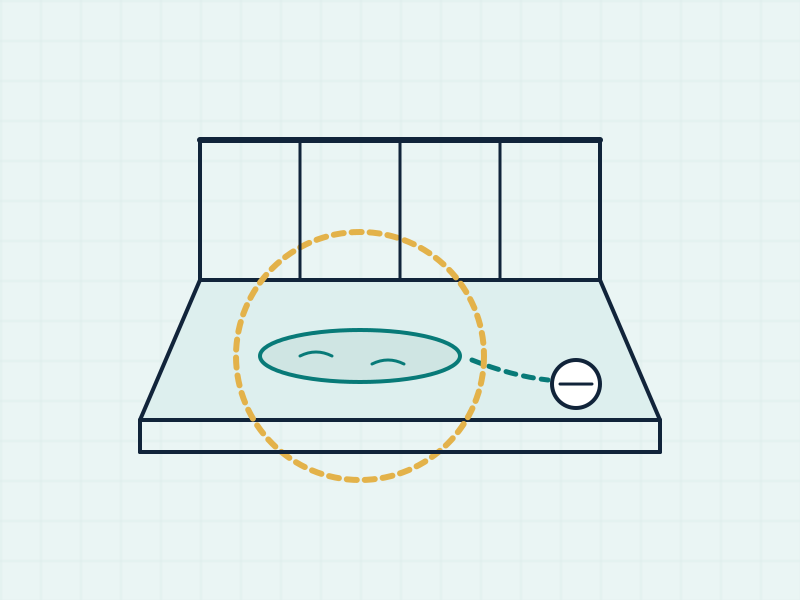
The buyer of a two-bedroom apartment plans to let it soon after handover. On inspection, the main bathroom shower drains slowly and leaves water near the screen. One bedroom stays noticeably warmer than the others with cooling running. The balcony door locks, but daylight is visible along the lower seal. A kitchen cabinet door rubs against its neighbour.
Individually, each item is small. Together they are the kind of things a tenant notices in the first week. Recorded at handover, they can be raised with the developer before anyone moves in.
Illustrative scenario
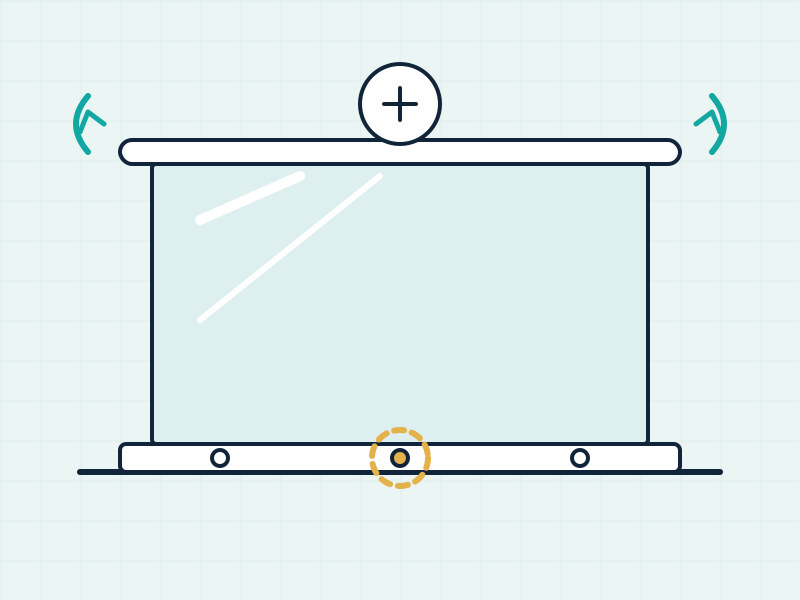
A family intends to move into a new three-storey townhouse within days of handover. The inspection notes water standing on the upper terrace after a simple drainage check, a handrail on the stairs that moves when pressed, an external door that needs force to lock, and gaps in the sealant around an upstairs window frame.
The stair handrail is a safety consideration with young children in the house. The terrace drainage matters before the next spell of heavy rain. Recording both before furniture arrives makes it easier for the developer’s team to work in an empty house.
Illustrative scenario
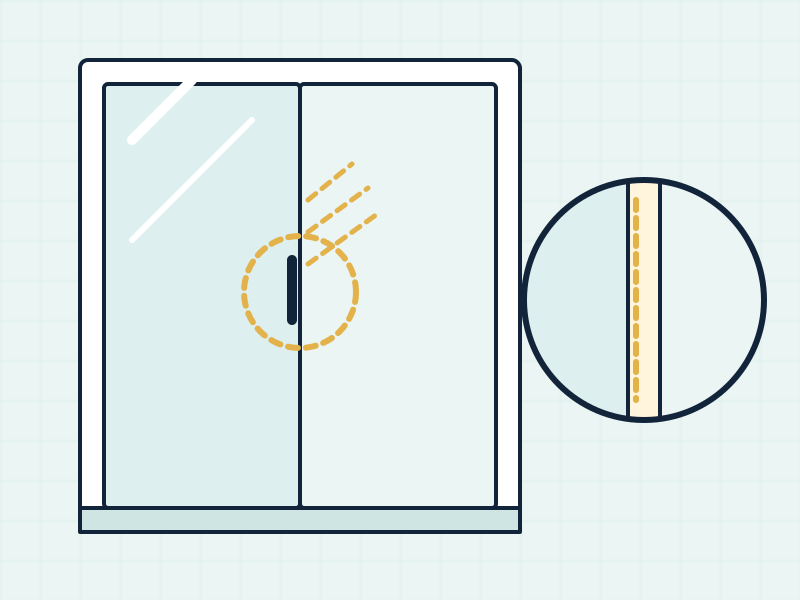
An owner is taking handover of a detached villa with large glass doors onto a garden terrace. The inspection records a sliding door that drags on its track and does not close evenly, staining on a ceiling below an upstairs bathroom, uneven cooling between the ground and first floors, and visible gaps in sealant at the junction between the terrace and the building.
The ceiling staining cannot be diagnosed visually. The report records it, notes that its source cannot be confirmed without further investigation, and suggests that the responsible party looks into it. That is the honest limit of a visual inspection, and it is still far better than discovering the stain months later with no record of when it first appeared.
Inspections work through six areas of the home, within the scope agreed in your quote. The detail differs by property type, so the scope for your home is confirmed in writing first.
Surfaces you can see and touch.
Limitation. Finishes behind furniture, fixed units or surfaces that cannot be accessed are not assessed.

Visible leaks and how water moves.
Limitation. Concealed pipework and waterproofing cannot be seen. A moisture reading alone does not prove a concealed defect.
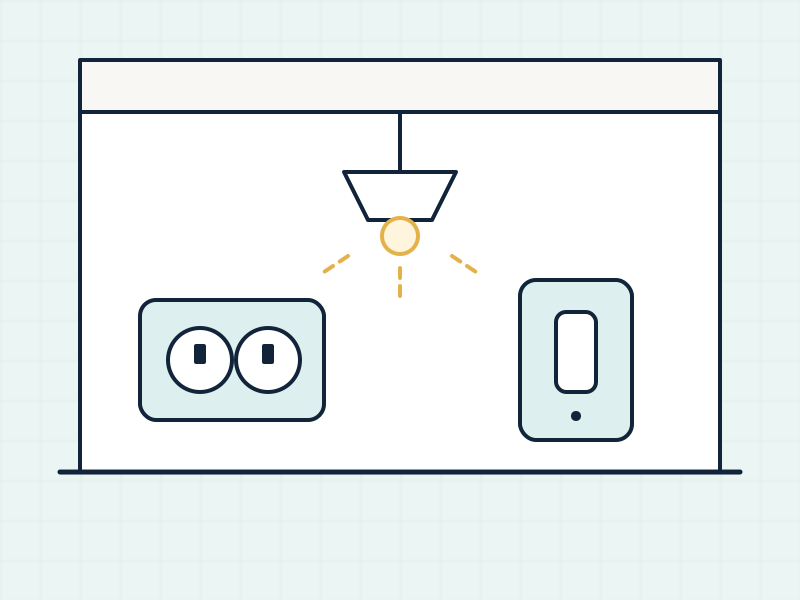
Accessible fittings, checked without opening anything.
Limitation. This is not an electrical safety certification, and distribution boards and wiring are not opened.

Observations under suitable operating conditions.
Limitation. Performance depends on conditions on the day. Systems are observed, not commissioned or balanced.
Doors, windows, cabinets and ironmongery.
Limitation. Operation is checked in normal use. Glazing performance and security ratings are not assessed.

Accessible areas outside the main living space, as agreed.
Limitation. Roofs, pools, plant rooms and unsafe areas are included only where agreed, and sometimes need a specialist.

One unit in a larger building.

Several levels with a shared-wall layout.

A larger standalone home with outdoor areas.
Developers are expected to hand over in accordance with applicable contractual standards and to address eligible defects under relevant legal and contractual obligations. An inspection report can help you document concerns and follow up.
In practice, your starting point is your own documents: the sale and purchase agreement (SPA), the specification and any handover or warranty documents. These describe what was agreed and the process for reporting defects. The developer then assesses each item under those terms.
Our guide to Defects Liability Periods (DLP) and warranties in Dubai explains the difference between statutory liability, contractual defects periods and product warranties in more detail.
Timing matters for three practical reasons.
The property is empty. Without furniture, rugs and belongings, floors, walls, wardrobes and wet areas are fully visible. Once you move in, some areas become harder to see and harder for repair teams to reach.
The record is clearly dated. A report produced before occupation makes it easier to show that an item existed at handover rather than arising from use. That distinction can matter when responsibility is assessed.
The process is still open. At handover, the developer's teams are typically still active on site and set up to receive snag lists. Raising items within that process is usually more straightforward than raising them later through a general enquiry channel.
A good record is specific. Each item should have a location, a photograph, a short description and a reference number. That turns a conversation about memory into a conversation about evidence. See how this looks on the sample report.
Every developer runs handover in its own way, so treat this as a general sequence and check your SPA and the developer's handover process for the details that apply to you.
Our Dubai handover checklist expands each step into a printable list, including what to bring on the day.
The value of a snag list depends on being able to show what was raised, when and how. A few habits protect that record:
Follow-up timelines vary. Check your SPA, any warranty documents and the developer's process for response or repair periods, and note any deadline for reporting items. Where none is stated, follow up politely and in writing at regular intervals.
Condition does not set the value of a property, and an inspection cannot change market rents. But condition does affect how smoothly a home becomes usable.
Depends on the market, location, pricing, demand and the unit itself. Snagging does not change any of these.
The state in which the property is received. This is the part an inspection report can help you document.
A conceptual model
Gross rent minus Operating costs minus Repairs and void periods equals Indicative operating income
Where handover condition can touch the model
Conceptual only. The model contains no figures. An inspection does not predict or improve rent, yield or capital value.
Think of it as two separate questions. The first is about the market: location, demand, rent levels and the price you paid. The second is about the property: whether it works as it should on the day you, or a tenant, move in. Inspection only touches the second question.
When items are found and raised before occupation:
When items surface after occupation, the same repairs can mean rearranging access, moving belongings and managing expectations. The benefit is practical readiness, not a financial forecast.
A report is the start of a process, not the end. After you submit it, the developer reviews each item and responds. Some items will be addressed quickly. Some may be disputed or need further investigation. Some may be missed.
Tell us the property type, stage and location. Sending an enquiry does not involve any payment.
You receive a written scope, its limitations and a quote before you decide anything.
You approve the quote. The owner gives separate consent before any provider access is arranged.
An appropriately licensed inspection provider, subject to verification and confirmed in your agreement, inspects the agreed scope.
Findings are documented with photographs, locations and notes. The inspection provider signs the professional report.
You can use the report to document concerns and follow up with the developer or responsible party.
Where agreed, a reinspection (sometimes called de-snagging) checks items reported as addressed.
Illustrative journey. Your agreement sets the actual scope, fees, consents and responsibilities.
That is why the follow-up stage matters. Keep a simple log against each reference number: when you reported it, what the developer said, and what happened. Our developer rectification guide includes a format you can use.
When you are told the work is complete, a Reinspection (sometimes called de-snagging) checks each item again and records whether it appears resolved, remains open or could not be checked. Without that step, it can be hard to know whether a repair was carried out, or carried out fully, until the problem returns. A reinspection is a visual check on the day: it cannot confirm concealed workmanship or that an item will not recur. Whether a reinspection is included, and on what terms, is set out before you proceed.
Reinspection terms
Terms are confirmed in writing in your quote.
Being clear about limits is part of doing this properly.
If you can answer all six, you are ready for a proper handover. Our Dubai handover checklist turns them into a printable list.
No. It is an optional service that buyers choose to arrange. How and when an independent inspector can attend depends on the developer's handover procedure and your sale and purchase agreement.
You can, and it is worth doing. A structured inspection adds a consistent method, functional checks where safe and a written, photographed record that is easier to submit and track.
No. A building completion certificate relates to the project. It is not a check of the finishes and fittings in your individual unit.
We do not advise on that decision. It depends on your contract and the nature of the items. Read your documents and take independent legal advice if you are considering it.
Not necessarily. Each item is assessed under the contract, any warranty and the applicable law. A clear report helps the conversation; it does not decide responsibility.
No inspection can promise that. It can help you understand the condition of the property and plan repairs before a tenant moves in, which is a practical benefit rather than a financial one.
Inspections can be coordinated remotely, with the report delivered digitally. You will still need to give your own consent and arrange lawful access. See our page for overseas owners.
Request an Inspection Quote
Tell us about the property. We confirm the scope, its limitations and a quote in writing before you commit. Sending an enquiry takes no payment.