Property Snagging & Inspections in Dubai

Sample report

Inside a Snagging Report

A good report tells you what was inspected, what was found, where, and what should happen next. This page walks through each part using a synthetic example.

Illustration: a report sheet with a cover block, a photo area and finding lines, marked as an illustrative exampleIllustrative image
On this page

Reports are prepared and signed by an appropriately licensed inspection provider, subject to verification and confirmed in your agreement. SnagRight coordinates the service and delivers the report to you. The exact format is confirmed before you accept your quote.

Explore an illustrative report

Switch between the views to see the same synthetic findings by room, by priority and by follow-up status, and how each one is recorded.

Illustrative example — not a real inspection

Five synthetic findings

EX-001

Bathroom

Remains open
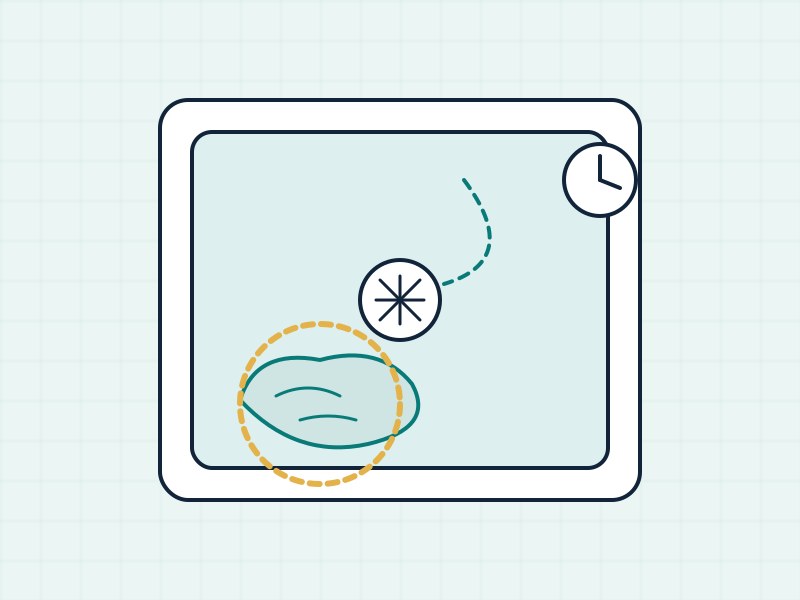
Illustration: a shower tray seen from above with a drain and a pool of water that has not drained awayIllustrative image
Area
Water and drainage
Observation
Water remains around the floor drain after a controlled test pour.
Indicative priority
Higher
Suggested next action
Ask the responsible party to check the floor fall and drain outlet.
EX-002

Balcony

Remains open
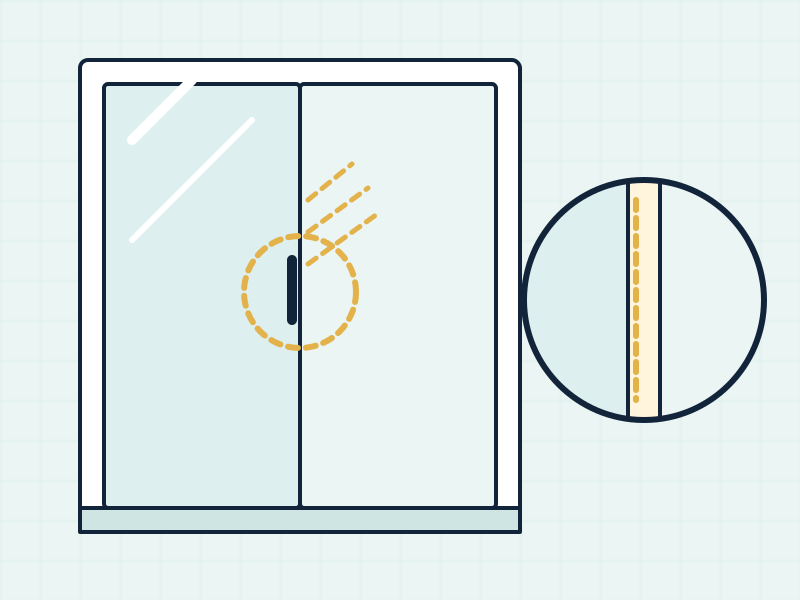
Illustration: a sliding balcony door with a gap at the seal where daylight shows through, and a magnified circle of the gapIllustrative image
Area
Openings and joinery
Observation
A visible gap at the lower seal of the balcony door.
Indicative priority
Medium
Suggested next action
Submit through the developer’s defect process with the photograph.
EX-003

Living room

Could not be checked
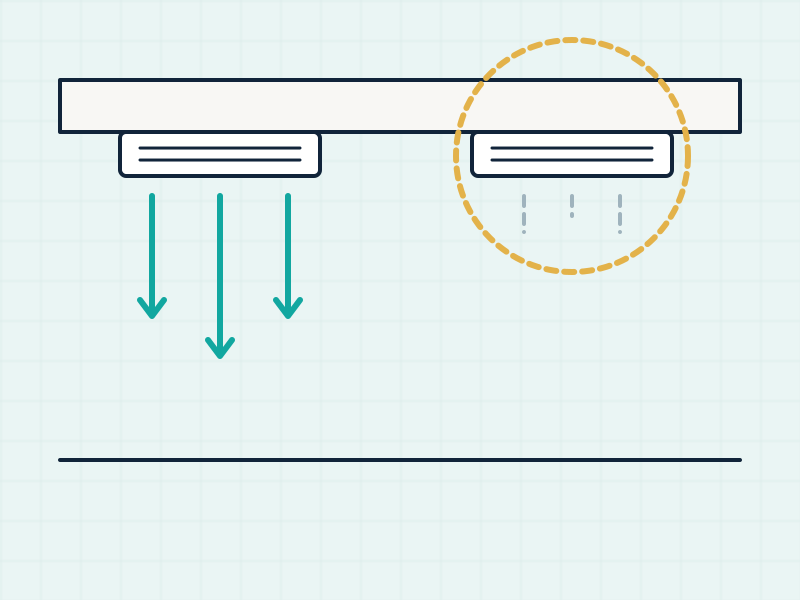
Illustration: two ceiling air grilles, one with strong air arrows and one with only a faint short flowIllustrative image
Area
Cooling and ventilation
Observation
Airflow from one supply grille feels noticeably weaker than the others.
Indicative priority
Medium
Suggested next action
Have the system checked by the appropriate trade.
EX-004

Bedroom

Remains open
Illustration: a wall socket plate sitting crooked on the wall with a gap around it and a small spirit level beneathIllustrative image
Area
Electrical fittings
Observation
A wall socket plate is loose at one corner.
Indicative priority
Higher
Suggested next action
Report it so the fitting can be inspected and secured.
EX-005

Kitchen

Appears resolved
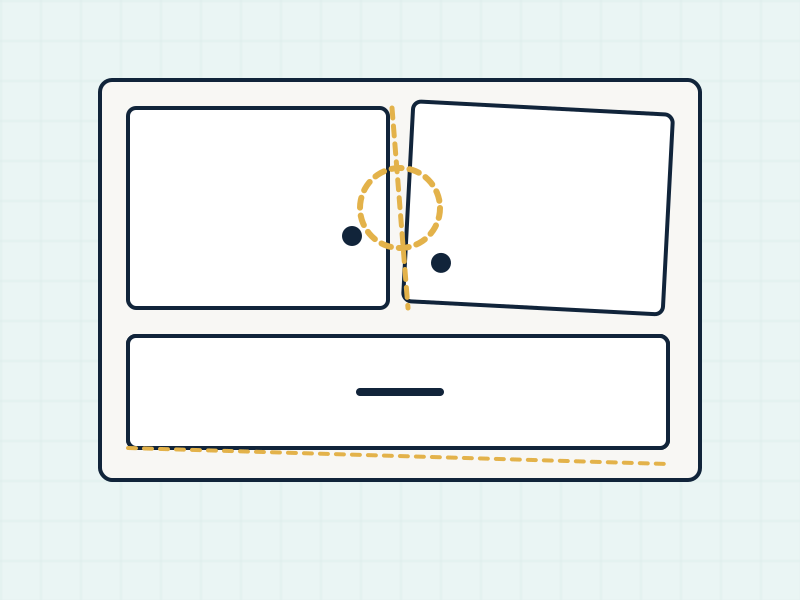
Illustration: two wall cabinet doors where one has dropped and sits crooked against its neighbour, above a drawer that hangs lowIllustrative image
Area
Openings and joinery
Observation
One cabinet door is misaligned and rubs the neighbouring door.
Indicative priority
Lower
Suggested next action
Confirm at reinspection if one is arranged.

Grouped by indicative priority

Priority is a guide to how soon to raise an item. It is not a risk score.

Higher

  • EX-001 Bathroom: Water remains around the floor drain after a controlled test pour.
  • EX-004 Bedroom: A wall socket plate is loose at one corner.

Medium

  • EX-002 Balcony: A visible gap at the lower seal of the balcony door.
  • EX-003 Living room: Airflow from one supply grille feels noticeably weaker than the others.

Lower

  • EX-005 Kitchen: One cabinet door is misaligned and rubs the neighbouring door.

Grouped by follow-up status

“Appears resolved” means the item looked addressed when it was last checked. It does not confirm concealed work or future performance. “Could not be checked” means access, conditions or scope did not allow it.

Remains open

  • EX-001 Bathroom: Water remains around the floor drain after a controlled test pour.
  • EX-002 Balcony: A visible gap at the lower seal of the balcony door.
  • EX-004 Bedroom: A wall socket plate is loose at one corner.

Appears resolved

  • EX-005 Kitchen: One cabinet door is misaligned and rubs the neighbouring door.

Could not be checked

  • EX-003 Living room: Airflow from one supply grille feels noticeably weaker than the others.

How to read a finding

Location
Each finding names the room and area, so it can be found again.
Observation
A plain description of what was seen, with a photograph in a real report.
Indicative priority
A guide to how soon to raise it. It is not a risk score and not a safety rating.
Suggested next action
A practical next step. Responsibility depends on your contract and the law.
Status
Where the item stands in follow-up. It changes only as evidence changes.

Status labels

  • Remains open
  • Appears resolved
  • Could not be checked

These cards are synthetic. They do not describe any real property, developer, customer or completed job, and the small pictures shown in place of photographs are generic illustrations, not photographs of anything real.

A report page at a glance

This is how a single page of a report is typically laid out: a header, a property summary, a table of findings, a priority legend and a sign-off area. It is a layout example only, with synthetic content.

Illustrative example — not a real inspection report

Snagging inspection report

Sample layout: apartment, new handover

Report reference
EX-REPORT-001
Inspection date
[Date shown in a real report]

1. Property summary

Property type
Apartment (synthetic)
Property stage
New handover
Unit and address
[Redacted in this example]
Areas inspected
Bathroom, kitchen, living room, bedroom, balcony
Not inspected
Roof and common areas (outside the agreed scope)
Conditions on the day
Power and water on, cooling running

2. Findings

Five synthetic findings
RefLocationIllustrationObservationIndicative prioritySuggested next action
EX-001Bathroom
Water and drainage
Illustration: a shower tray seen from above with a drain and a pool of water that has not drained awayWater remains around the floor drain after a controlled test pour.HigherAsk the responsible party to check the floor fall and drain outlet.
EX-002Balcony
Openings and joinery
Illustration: a sliding balcony door with a gap at the seal where daylight shows through, and a magnified circle of the gapA visible gap at the lower seal of the balcony door.MediumSubmit through the developer’s defect process with the photograph.
EX-003Living room
Cooling and ventilation
Illustration: two ceiling air grilles, one with strong air arrows and one with only a faint short flowAirflow from one supply grille feels noticeably weaker than the others.MediumHave the system checked by the appropriate trade.
EX-004Bedroom
Electrical fittings
Illustration: a wall socket plate sitting crooked on the wall with a gap around it and a small spirit level beneathA wall socket plate is loose at one corner.HigherReport it so the fitting can be inspected and secured.
EX-005Kitchen
Openings and joinery
Illustration: two wall cabinet doors where one has dropped and sits crooked against its neighbour, above a drawer that hangs lowOne cabinet door is misaligned and rubs the neighbouring door.LowerConfirm at reinspection if one is arranged.

3. Priority legend

  • Higher Raise promptly. Often relates to safety, use or possible water entry.
  • Medium Raise in the normal follow-up. Affects use or finish.
  • Lower Mainly appearance or minor adjustment.

Priority is a guide to how soon to raise an item. It is not a risk score and not a safety rating.

4. Sign-off

Prepared and signed by

[Inspection provider — named in your agreement]

Signature

Signature area, blank in this example

Date signed

Date area, blank in this example

Illustrative example — not a real inspection report. Synthetic data showing the layout of a report page only. It does not describe any real property, developer, inspection or finding, and the format of your own report is confirmed in your agreement.

The anatomy of a report

Educational diagram of an inspection report's anatomy: stable reference, location, observation, indicative priority and follow-up

An inspection report: finding to next action

  1. What you may see Each entry carries a stable reference, a location, a plain description of what was observed, an indicative priority, and space for follow-up.
  2. Why it may matter A consistent structure makes a report easy to act on: you can find an item, share it, and track whether it has been addressed.
  3. What this does not establish This is a synthetic example of structure only. It is not a real property’s findings and is not a real provider’s signed report.
  4. A sensible next step Read each entry against its photograph, and use the reference when you raise an item with the developer or contractor.

Illustrative guidance — technical review pending. A synthetic example of layout; not a real provider’s signed report.

1. Cover and property details

The first page identifies the property, the type and size, the inspection date and the inspection provider responsible for the report. Check these details before anything else: a wrong unit number undermines everything that follows.

2. Conditions on the day

This section records whether water, electricity and cooling were running, whether the property was empty, furnished or occupied, and anything else that affected the inspection. These conditions explain why some checks were possible and others were not.

3. Scope and limitations

Here you see the areas and systems that were included, the areas that were not inspected and why, and the general limits of a visual, non-destructive inspection. Read this section carefully. An area not inspected is not an area without issues.

4. Summary

A short overview lists the number of findings by area and by priority, so you can see the overall picture at a glance and decide where to focus first.

5. Findings

The body of the report. Findings are grouped by room, level or zone, depending on the property. Each finding card includes:

  • reference number, such as a short code for the area and a sequence number;
  • location, precise enough for someone who has never visited to find it;
  • observation, a factual description of what was seen or experienced;
  • photographs, ideally one close-up and one wider view;
  • priority, using the provider's defined categories;
  • suggested next step, such as adjust, repair, replace or investigate further.

6. Priority definitions

Each provider defines its own categories. The report explains them, so you know what each label means. A priority is a ranking, not a diagnosis.

7. Follow-up table, where agreed

If a Reinspection (sometimes called de-snagging) is carried out later, its results follow the original reference numbers. Each item is shown as appearing resolved, remaining open or not checked, with a current photograph where practical.

What makes a report useful?

  • It is specific. "Gap along lower seal of balcony door, living room" is actionable. "Doors need adjusting" is not.
  • It is factual. It describes what was observed without guessing at concealed causes.
  • It is honest about limits. It states what was not inspected and why.
  • It is easy to track. Stable reference numbers carry through to every follow-up message and any reinspection.

How to use your report

Submit the full report through the developer's or responsible party's formal channel, keep a dated copy and track responses by reference number. Our guides on how to read a snagging report and following up with the developer explain each step. For illustrated examples of the kinds of items that appear in reports, browse the defect library.

Common questions

Is the example on this page a real report?

No. It is a synthetic example created to show the structure of a report. It does not describe a real property, inspection or finding.

Will my report look exactly like this?

The structure will be similar, but the exact format is set by the inspection provider and confirmed before you accept your quote.

Can I download a genuine sample?

Not yet. A genuine, fully redacted sample will be added once its use has been authorised. Until then, this page uses a synthetic example.

In what format is the report delivered?

The delivery format and how you access the report are confirmed in your quote and agreement.

Request an Inspection Quote

Tell us about the property. We confirm the scope, its limitations and a quote in writing before you commit. Sending an enquiry takes no payment.

Request an Inspection Quote