
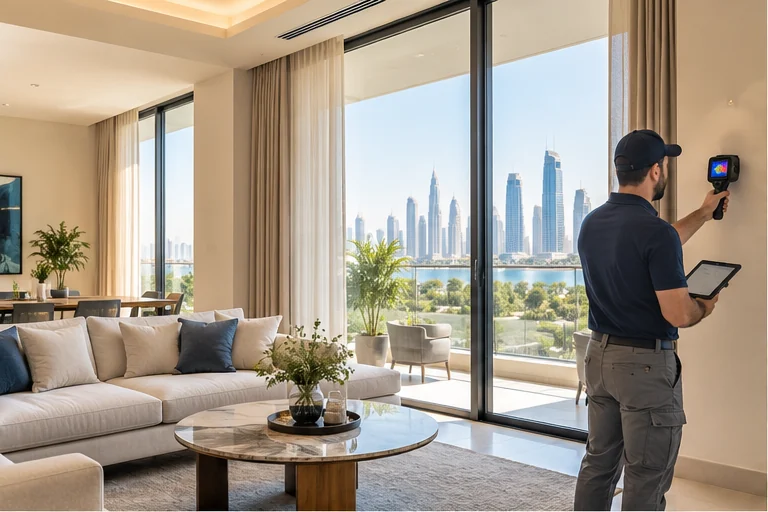
Who is the Apartment Inspection for?
This service focuses on a single apartment unit, from a studio to a duplex or penthouse. It is useful for:
- buyers taking handover of a newly completed apartment from a developer;
- owners who plan to let the apartment and want issues dealt with before the first tenant moves in;
- owners abroad who need someone else's eyes on the unit, with the report delivered digitally;
- investors holding several units in one building who want a consistent record for each.
If you are buying an apartment from its current owner, the Resale Property Inspection is the better fit. If you already live in the apartment and a Defects Liability Period (DLP) is ending, see the DLP / Warranty Inspection.
What makes an apartment different?
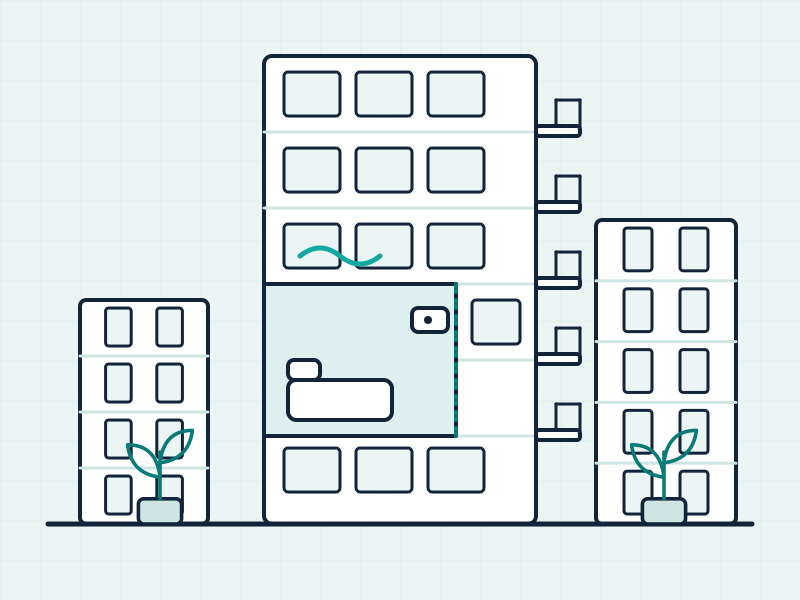
In an apartment, the inspection covers what sits inside the unit and its private balcony or terrace. The structure, façade, lifts, central plant and shared areas serve the whole building, are not part of the individual-property scope, and are dealt with separately — typically through the owners association and building management. Within the unit, three things deserve particular attention.
Balconies and glazing. Large windows, sliding doors and balconies are where the unit meets heat, dust and wind-driven rain. Door seals, locking, the fall of the balcony floor towards its drain and the fixing of balustrades all matter. See the Defect Library entries on balcony door seal gaps, water standing on balconies, sealant around external frames and loose balustrades.
Wet areas in a compact plan. Several bathrooms and a kitchen sit close together, with neighbours above and below. Continuous sealant, drains that clear and dry visible connections are worth checking carefully. See missing or discontinuous sealant, slow drainage, moisture indicators near wet areas and drips at visible connections.
Cooling supplied by the building. Many towers use a central or district cooling system that supplies the cooling outlets in each room. Whether cooling can be observed on the day depends on that supply, and sometimes on the unit's cooling account being activated. See uneven cooling between rooms, weak airflow and condensation at grilles.

Kitchen: what an inspection examines
- What you may see Visible pipework and shut-off points under the sink, the sink and worktop sealant line, cabinet doors and drawers that bind or sit unevenly, and switches and sockets that are loose or marked.
- Why it may matter Recording these helps you follow them up. A gap in a sealant line, or a fitting that does not sit true, can be noted now while it is still easy to correct.
- What this does not establish This is a visible and functional check. It does not involve intrusive testing and does not confirm electrical sign-off; concealed services behind units are not opened.
- A sensible next step Keep each observation with its photo and location, and ask for the responsible party to address it before you accept the kitchen.
Illustrative guidance — technical review pending. The diagram does not imply intrusive testing or electrical sign-off.
When is the right time to inspect?
For a new apartment, the most useful moment is after the developer confirms the unit is complete and open, with services connected, and before you sign the final handover documents, where the developer's process allows it.
- Start early. Enquire as soon as you receive a handover notice, even a provisional one. Building registration and access arrangements can take time to confirm.
- Ask how the developer runs handover. Some developers allow an independent inspection during the handover appointment; others offer a separate inspection visit before key collection.
- Aim for services on. A visit with water, power and cooling running gives a far more useful picture than one without.
- Leave time to submit. Inspect early enough that you can submit the findings within the developer's process, rather than in the last days before a deadline.
Our Dubai handover checklist sets out the full sequence from notice to keys.
What needs to be arranged before the visit?
Apartments depend on the building for access and services, so a little preparation makes a big difference.
- Building access: any visitor or contractor registration, or permit, that building management or security requires, completed in advance.
- Keys: for the front door, every room, wardrobes, storage, the balcony and any utility cupboard within the unit.
- Water and electricity: connected, so taps, drains, lights and sockets can be checked in use. Your utility account may need to be in place, depending on the developer's process.
- Cooling: running in every room, with the cooling supply activated where the building uses central or district cooling.
- A clean, clear unit: construction debris removed and, where the developer allows, protective film taken off glass, frames and worktops.
- Parking or arrival instructions: so the visit can start on time.
If something is unavailable on the day, the limitation is written into the report rather than guessed around. You can then decide whether a later check is worthwhile.
What is checked in an apartment?
The scope is confirmed in your quote. It typically includes the following, where present and accessible.
Entrance and circulation
- front door, frame, ironmongery and closer;
- corridor walls, ceilings, flooring and skirting;
- utility cupboard doors and any visible fittings inside, observed visually.
Kitchen
- worktops, splashbacks and cabinet doors, including alignment, hinges and soft-close mechanisms;
- sink, mixer and visible connections, with a simple run-and-drain check;
- visible sockets and switches serving appliances, and the extract hood or fan at a simple on-off level.
Bathrooms and cloakrooms
- tiling, grout and sealant around baths, showers, basins and toilets;
- shower drainage and any pooling, with a short functional check;
- vanity units, mirrors, accessories and the extract fan.
Living spaces and bedrooms
- walls, ceilings, paint and flooring;
- doors, ironmongery, wardrobes and skirting;
- air-conditioning outlets and how each room responds when cooling is on;
- light fittings, sockets and switches at user level.
Balcony and glazing
- sliding or hinged doors: operation, locking, seals and glazing;
- windows, handles and any restrictors;
- balcony floor finish, falls towards the drain and the drain outlet;
- balustrade fixings, checked by hand where safe, and visible sealant at junctions.
Apartment checklist
Areas that commonly matter in a new or resale apartment.
Wet areas
Cooling and ventilation
Openings and balcony
Finishes and fittings
A general guide for your own walk-through. It does not replace a professional inspection, and it cannot show concealed defects. Take photographs of anything that concerns you and note the room.
What sits outside an Apartment Inspection?
- common corridors, lobbies, lifts, car parks, gyms and pools;
- the façade, roof and shared mechanical, electrical and plumbing (MEP) plant, which are building matters;
- the structural performance of balconies, glazing systems and balustrades;
- concealed services inside walls, ceilings and floor voids;
- appliance testing beyond simple power-on checks, unless specifically agreed;
- noise transfer, structural performance or anything requiring invasive testing.
What does a typical inspection day look like?
- Arrival and access. The inspection provider arrives at the building, completes any security registration and meets you, your representative or the developer's team at the unit.
- Conditions on the day. Before starting, the provider notes whether water, power and cooling are running, whether the unit is empty, and any rooms or areas that are locked.
- Room by room. Working from the entrance, each room is checked in a consistent order: finishes, doors and joinery, then fittings at user level.
- Wet areas in use. Taps are run, drains observed and extract fans switched on, with sealant and visible connections checked.
- Cooling. With cooling running, the response in each room and the airflow at outlets are observed.
- Balcony and glazing. Sliding doors and windows are operated and locked, and the balcony floor, drain, sealant and balustrade fixings are checked where safe.
- After the visit. Findings are written up, photographed and referenced in a signed report, delivered in the format and timeframe confirmed in your agreement.
What does the report include?
The report from the inspection provider lists findings room by room, with the balcony and glazing grouped so they are easy to pass on. It includes:
- property details, the inspection date and the conditions on the day, such as whether cooling was running;
- the agreed scope and any areas that could not be inspected, with reasons;
- a summary of findings by area and priority;
- for each finding, a reference number, location, photographs, a short description, a priority set by the provider and a suggested next step.
See the sample report for an illustration of the layout, and our guide on how to read a snagging report for help with priorities.
What happens with the developer?
You pass the findings to the developer, or to the relevant responsible party, through their formal channel. Developers are expected to hand over in accordance with applicable contractual standards and to address eligible defects under relevant legal and contractual obligations. An inspection report can help you document concerns and follow up.
In an apartment, a few practical points help the follow-up run smoothly:
- Submit the whole report once, in the format the developer asks for, and keep a dated copy with any acknowledgement or case number.
- Ask for an item-by-item response by reference number, so you can see what is accepted, queried or scheduled.
- Plan access for repairs. Repair teams may need building registration too, and you or your representative may need to let them in.
- Separate unit items from building items. Concerns about common areas or the façade go to building management or the owners association, not into your unit snag list.
Our guide to following up with the developer includes a simple log you can use. If you are preparing the apartment for a tenant, see snagging before renting.
Can items be checked again after repairs?
Yes. A Reinspection (sometimes called de-snagging) revisits the listed findings once you are told they have been addressed, and records each one as appearing resolved, remaining open or not checked. Whether it is part of your quote or arranged separately is stated in writing beforehand.
Common questions
Does an Apartment Inspection cover the building's lobby, lifts or pool?
No. Common areas and shared facilities are managed for the building as a whole and are outside a unit inspection. The scope covers the apartment and any balcony or terrace that forms part of it.
Why does the air conditioning need to be running?
Cooling performance can only be observed when the system is operating. In buildings with central or district cooling, the supply to your unit may need to be activated first. If cooling is off, the report says so and you can decide whether a later check is worthwhile.
Is a studio inspected differently from a three-bedroom apartment?
The method is the same, but the time on site and the number of wet areas, rooms and openings differ. That is one reason each property is quoted individually.
Should protective film be removed from glass and worktops first?
Where the developer's process allows, yes. Film and stickers can hide scratches, chips and marks. If they are still in place on the day, the report notes it as a limitation.
Do I need to attend the inspection?
It helps but is not essential. Someone must provide lawful access to the unit, and the building may need to register the visit in advance. Owners abroad often arrange access through the developer or an authorised representative.
Are balcony glass panels and the building façade checked?
The balcony's door, floor, drain, visible sealant and balustrade fixings are observed where accessible. The façade and the structural performance of glazing systems are building matters and outside a unit inspection.
Can the inspection be arranged for a resale apartment?
Yes. For an apartment you are buying from an existing owner, the Resale Property Inspection is designed around an occupied or previously used home.
Do I need permission from building management?
Some buildings require visitors or contractors to be registered, or a permit to be issued, before entry. This is checked when access is confirmed, and you may need to request it as the owner or buyer.
Request an Inspection Quote
Tell us about the property. We confirm the scope, its limitations and a quote in writing before you commit. Sending an enquiry takes no payment.