
Who is a post-renovation inspection for?
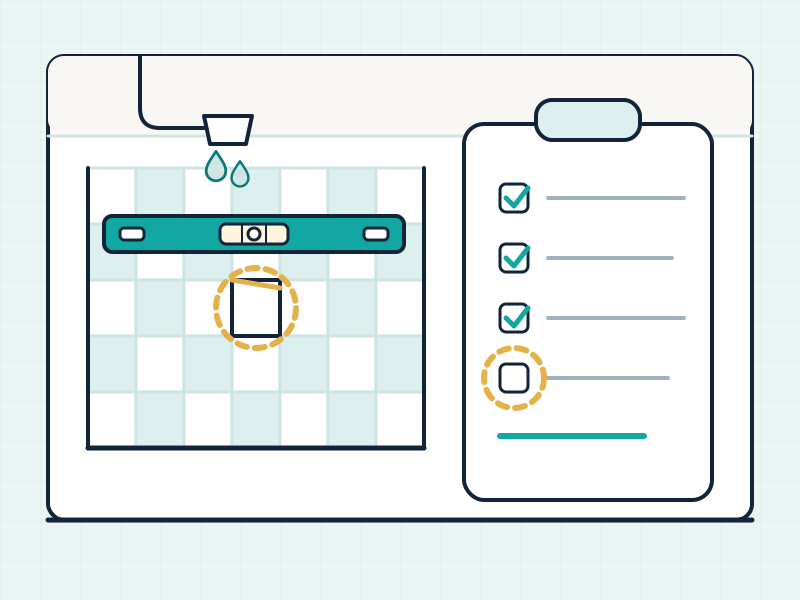
Renovation work rarely fails all at once. It fails in details: a tile edge that catches a bare foot, a cabinet door that drifts, a bead of sealant that stops short of the corner. These are easy to miss while the dust is settling and the contractor is keen to close the job. This service is for owners who want those details written down before they say "finished".
It suits:
- apartment, townhouse and villa owners who have renovated, refurbished or fitted out their home;
- investors and landlords preparing a property for a new tenancy after works;
- buyers who renovated after purchase, before the contractor leaves site for good;
- owners abroad whose works were managed remotely and who cannot walk the property themselves.
When should you book?
Timing matters more here than with a new-build handover, because your leverage with a contractor depends on what has, and has not, been paid. The most useful moments are:
- at practical completion, when the contractor says the works are done and before the final account is settled;
- before final payment or retention release, so outstanding items are on record while money is still held under your contract;
- after a fit-out, once joinery, finishes and fittings are installed and the property has been cleaned;
- before a tenant moves in, when you need a clear record of condition after the works.
Book once water, power and cooling are running and trades have left the areas to be inspected. Items that cannot be operated cannot be checked in use.
What may be checked, within the agreed scope?
The inspection is visual and non-destructive, in safe, accessible areas, within the agreed scope confirmed in your quote. Because renovation scopes vary so widely, the inspection is planned around the works you actually commissioned, not a fixed list. Typically it may include:
Workmanship and finishes
- joinery: alignment, gaps, door and drawer operation, hinges and soft-close mechanisms;
- tiling: lippage between tiles, grout lines, cuts at edges and around fittings;
- paintwork: coverage, overspray onto fittings, and patch repairs that show;
- flooring: level transitions, gaps at thresholds and skirting junctions;
- ceilings: cracks, access panels and cornice joints;
- doors: swing, latching and alignment.
Wet areas
- visible evidence relating to waterproofing, such as sealant continuity, falls to drains and how wet areas drain in use;
- sanitaryware, taps and showers: fixing, operation and visible leaks at fittings.
Accessible fittings and services
- electrical faceplates, switches and light fittings at user level;
- air-conditioning grilles and ventilation: fixing, airflow and debris left after works;
- plumbing fixtures and accessible visible pipework under basins and sinks;
- kitchen and bathroom installations: units, worktops, how built-in appliances sit within the joinery, and extract fans.
See the renovation and fit-out entries in the Defect Library for illustrated examples such as sealant around sanitaryware, joinery alignment and loose or misaligned faceplates.

Renovation: before contractor sign-off
- What you may see Visible workmanship at junctions and edges, fittings that are secure and aligned, surfaces free of overspray or damage, and a clear list of items still outstanding.
- Why it may matter A completion check before sign-off gives you a documented list of agreed workmanship, and of outstanding items to resolve with the contractor.
- What this does not establish It focuses on accessible, visible work. It does not confirm compliance, does not open concealed services, and does not cover structural alterations.
- A sensible next step Agree the outstanding-items list with the contractor, with photographs, and keep it as the record for putting the work right.
Illustrative guidance — technical review pending. Focus on agreed workmanship and accessible fixtures, not concealed or structural matters.
What is outside the scope?
Unless your quote expressly includes them, a post-renovation inspection does not cover:
- concealed works: pipework, cabling, waterproofing membranes and anything behind finished surfaces;
- structural engineering: whether walls were safely removed or altered, or loads carried correctly;
- authority or community approvals, permits or compliance certificates of any kind;
- anything requiring destructive testing, such as lifting tiles or opening up walls;
- electrical installation testing, distribution boards and wiring;
- specialist systems such as pools, smart-home or audio-visual equipment.
What should you have ready?
You do not need every document to make an enquiry, but the inspection is far more useful when it can be compared against what was agreed. Have ready, where available:
- the contractor's scope of works or bill of quantities (BOQ);
- drawings, layouts or design visuals for the works;
- warranties and product information for appliances, fittings and materials;
- the contractor's own snag list or completion list, if they issued one;
- a note of anything you have already raised with the contractor.
Building and community rules
Many buildings and communities have their own rules for renovation works, such as permission before work starts, working hours and conditions for completion. These vary from place to place. Check with your building management or community about what applied to your works and whether anything is needed at completion. The inspection does not assess compliance with those rules.
What does the report include, and what happens next?
You receive a dated, signed report in the format confirmed in your agreement. Each finding has a reference number, location, photographs, a short description, a priority set by the inspection provider and a suggested next step. Limitations, such as rooms that were locked or fittings that could not be operated, are listed with reasons.
A practical follow-up sequence:
- Submit the report to the contractor in writing, with a covering note asking for an item-by-item response.
- Agree a rectification period. Check your contract for any defects or retention provisions and work within them.
- Keep a log by reference number, recording each response and visit.
- Check the repairs, yourself for simple items or through an optional reinspection.
Our guide to renovation defects and contractor rectification explains each step.
Can items be checked again after repairs?
Yes. A Reinspection (sometimes called de-snagging) revisits the earlier findings by reference number and records whether each appears resolved, remains open or could not be checked.
Reinspection terms
Terms are confirmed in writing in your quote.
Landlords and investors: readiness before tenancy
A dated record of the condition after works gives you a clearer starting point for a tenancy and a reference if questions come up later. It does not change rent, value or returns. See our guide to snagging before renting for the wider picture.
Common questions
When is the best time to book a post-renovation inspection?
Once the contractor says the works are complete, the property has been cleaned, and water, power and cooling are running, but before you make the final payment or release any retention. If you are not sure the works are ready, describe the stage when you enquire.
Can you inspect a renovation that is only partly finished?
An inspection can be scoped for a defined part of the works, such as a finished kitchen or bathroom. Areas still under construction are recorded as not inspected. What is included is set out in your quote.
Will the report say whether the works comply with building or community rules?
No. The inspection is a visual check of workmanship and accessible fittings. It is not an approval, a compliance check or a completion certificate. Check with your building management or community about any approvals your works needed.
Can the inspection check the waterproofing under my new shower?
Not directly. Waterproofing layers are concealed once tiles are laid. Visible signs, such as sealant, falls to the drain and how the shower drains in use, can be observed. Ask your contractor for any records they kept of waterproofing before tiling.
Does SnagRight deal with my contractor for me?
No. SnagRight coordinates the inspection and the report. You, or someone you authorise, send the report to the contractor and agree the rectification. Any further support is described in your agreement.
Can items be checked again after the contractor's repairs?
Yes. A reinspection (sometimes called de-snagging) checks the earlier findings by reference number. It is quoted on its own terms, confirmed in writing.
Is this useful if I am letting the property?
It can help. A dated record of the condition after works gives you a clear starting point before a tenant moves in. It does not change rent, value or returns, and it is not a substitute for a tenancy inventory.
Request an Inspection Quote
Tell us about the property. We confirm the scope, its limitations and a quote in writing before you commit. Sending an enquiry takes no payment.