
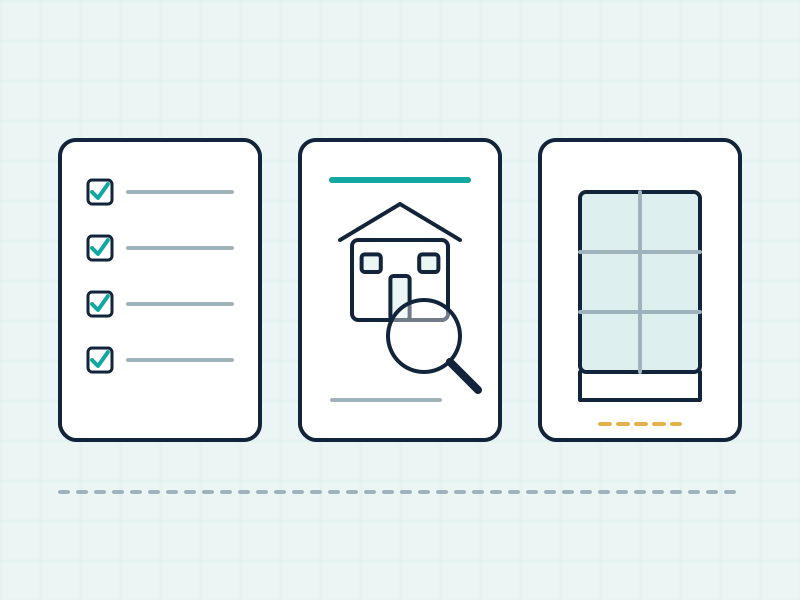
What question does each one answer?
- Snagging inspection: "Is this new home finished and working as it should, before I accept it?"
- Condition inspection (often called a home inspection): "What condition is this existing home in, and what might need attention?"
- Structural survey or assessment: "Is there a problem with the structure, and what is causing it?"
The names are used loosely, so the question you need answered is the best guide.
How do they compare?
| Snagging inspection | Condition inspection | Structural survey | |
|---|---|---|---|
| Typical property | Newly built home | Existing, often occupied home | Any property with a structural concern |
| Typical timing | Around developer handover, or before a defects period ends | Before buying a resale home, or during ownership | When cracks, movement or alterations raise questions |
| Focus | Finishes, fittings, openings, cooling and drainage in use | The same areas, plus wear, past repairs and signs of moisture | Structural elements and their behaviour |
| Method | Visual and non-destructive, with user-level functional checks | Visual and non-destructive, around furniture and belongings | Engineering assessment, which may include investigation or testing |
| Output | Snagging report with referenced findings | Condition report with referenced findings | Engineer's report and recommendations |
| SnagRight service | Pre-Handover Snagging, DLP / Warranty Inspection | Resale Property Inspection | Not offered; arranged separately |
Specialist checks sit alongside all three: pool equipment, plant rooms, electrical installation testing and similar work each need their own scope. See what inspections cover for where the line is drawn.
When is snagging the right choice?
Choose a snagging inspection when you are receiving a new home from a developer and want a documented record of observable items before you accept it, or when you already hold the keys and want items recorded before a Defects Liability Period (DLP) or warranty deadline. The findings are designed to be submitted to the developer and tracked by reference number.
When is a condition inspection the right choice?
Choose a condition inspection when you are buying from an existing owner, or you want a view of an existing home's state. It asks broader questions than snagging, because the home has been lived in: what is wear, what has been repaired, what shows signs of moisture. It still works within the limits of a visual inspection, and furniture and stored items can restrict what is seen.
When do you need a structural survey?
Consider a structural assessment by a suitably qualified structural professional when there are signs that go beyond finishes, for example:
- cracks that are wide, growing, stepped or recurring after repair;
- doors and windows that start to bind across a whole area of the home;
- visible movement, deflection or alterations to load-bearing elements;
- a snagging or condition report that recommends further structural investigation.
A visual snagging or condition inspection can record and photograph these signs. It cannot diagnose their cause.
How do you decide? A four-question framework
- Is the home new and not yet handed over, or recently handed over? Snagging, through Pre-Handover Snagging or a property-type inspection.
- Are you buying from an existing owner? A condition inspection, through the Resale Property Inspection.
- Do you live in the home and is a defects or warranty period ending? The DLP / Warranty Inspection.
- Are there signs of a structural problem? A structural assessment by a suitably qualified structural professional, possibly alongside one of the above.
If more than one applies, they can be combined, with each element written into its own scope.
Answer up to three questions to see a suggested starting point. Nothing you select is sent or stored, and no personal details are asked for.
Suggested starting points by stage
- New handover: Pre-Handover Snagging
- Buying resale: Resale Property Inspection
- Warranty ending: DLP / Warranty Inspection
- Renovation completed: Renovation Inspection
- Repairs completed: Reinspection
A suggestion only, not a professional selection. The inspection provider confirms the actual scope in your written quote.
Why does "full inspection" need defining?
Two services with the same name can cover very different things. Before you commit, ask for the scope in writing: which areas and systems are included, which are excluded, what access and utilities are needed, and what the report will contain. Our guide to apartment, townhouse and villa differences shows how the scope changes by property type.
Where does SnagRight fit in?
SnagRight coordinates snagging and condition inspections, DLP / Warranty Inspections and reinspections. Each is performed, and the report signed, by an appropriately licensed inspection provider, subject to verification and confirmed in your agreement. SnagRight does not arrange structural surveys or give engineering opinions, and no inspection can find every defect.
Common questions
Does SnagRight arrange structural surveys?
No. The services SnagRight coordinates are visual and non-destructive. If a report suggests a structural concern, it recommends further investigation, and you would engage a suitably qualified structural professional separately.
Is a snagging inspection enough for a resale home?
A resale home needs a condition-focused inspection that considers wear, past repairs and occupied rooms. That is what the Resale Property Inspection is designed for.
Will a snagging inspection test the electrical installation?
No. Electrical fittings are checked visually and at user level where power is on. Testing the installation itself, or opening distribution boards, is specialist work outside the standard scope.
Can a crack in a wall be assessed by a snagging inspection?
A crack can be recorded, located and photographed. Whether it relates to finishes or structure needs technical assessment, which may mean a specialist investigation.
What does "full inspection" mean?
There is no single definition. Always ask what is included and excluded, and get it in writing before you commit.
Request an Inspection Quote
Tell us about the property. We confirm the scope, its limitations and a quote in writing before you commit. Sending an enquiry takes no payment.